How To Track SEO Progress And Measure Real Growth
One of the biggest mistakes businesses make with SEO is expecting immediate results without tracking the right data.
SEO is not just about rankings. A website can rank higher but still fail to generate meaningful traffic or conversions. At the same time, some pages may experience traffic growth even when rankings fluctuate.
Understanding how to track SEO progress properly allows businesses to measure what is actually improving, identify weaknesses early, and make smarter optimisation decisions over time.
Modern SEO tracking now extends beyond traditional keyword monitoring into AI visibility, user engagement, technical performance, and search intent alignment.
Quick Answer: How To Track SEO Progress?
To track SEO progress effectively, businesses should monitor keyword rankings, organic traffic, click-through rates, conversions, technical SEO health, backlinks, and AI search visibility using tools such as Google Search Console and Google Analytics.
Track Organic Traffic Growth
Organic traffic remains one of the clearest indicators of SEO performance.
If your SEO strategy is working, your website should gradually attract more users from search engines over time.
Using Google Analytics allows businesses to measure:
- Organic sessions
- User behaviour
- Landing page performance
- Traffic sources
- Engagement metrics
Traffic trends provide insight into whether content visibility and search demand are improving. However, traffic alone should never be the only KPI because visibility without conversions may not create business growth.
Monitor Keyword Rankings Carefully
Keyword rankings remain important because they show how visible your pages are in search results.
Tracking rankings helps identify:
- Which keywords are improving
- Which pages are declining
- Which opportunities are emerging
However, rankings should be viewed strategically rather than emotionally. Search results fluctuate constantly due to competition, algorithm updates, location, and personalisation.
The focus should be on long-term visibility trends instead of daily ranking movements.
If an agency reports rankings without showing you this data, our guide on how to choose the best SEO company in Singapore explains what to ask for instead.
Measure Click-Through Rate Performance
A high ranking does not always guarantee clicks.
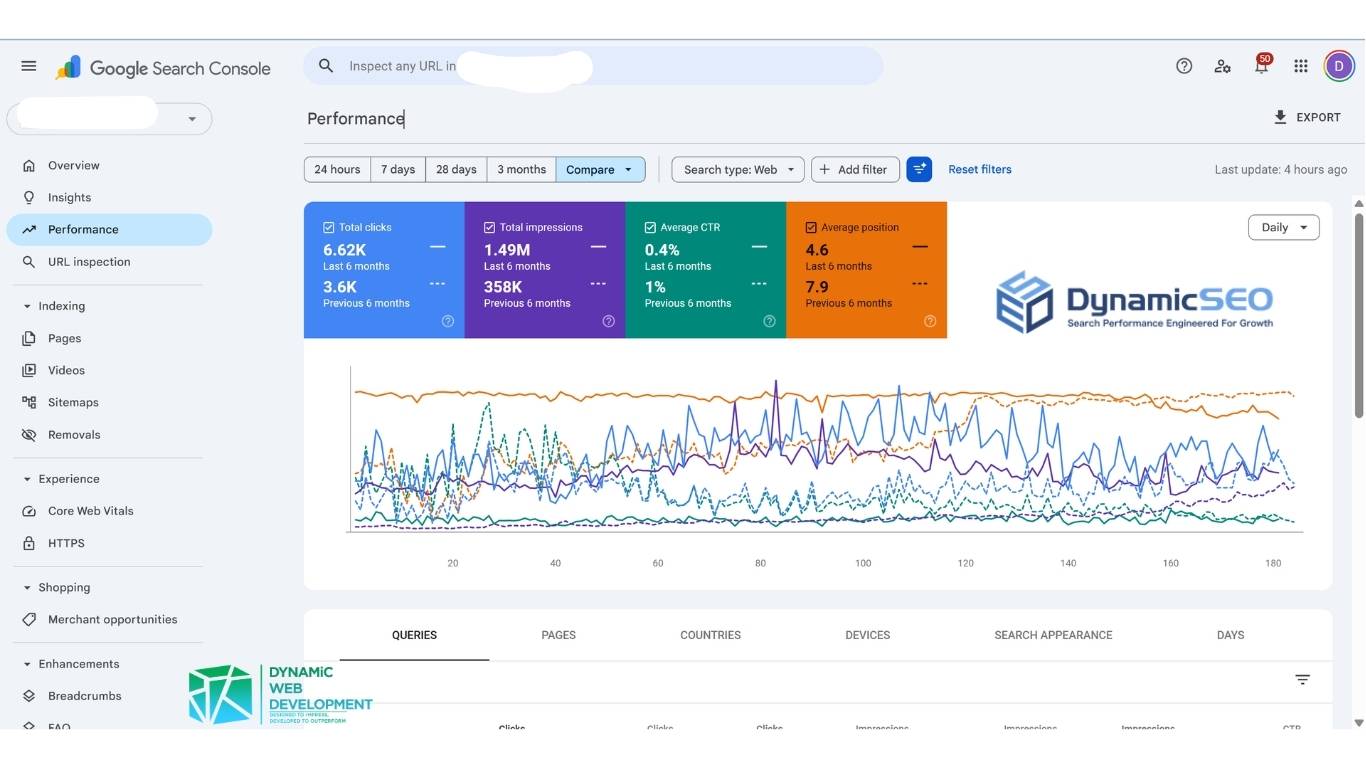
Click-through rate (CTR) measures how often users click your search result after seeing it. This metric can reveal whether your title tags and meta descriptions are compelling enough.
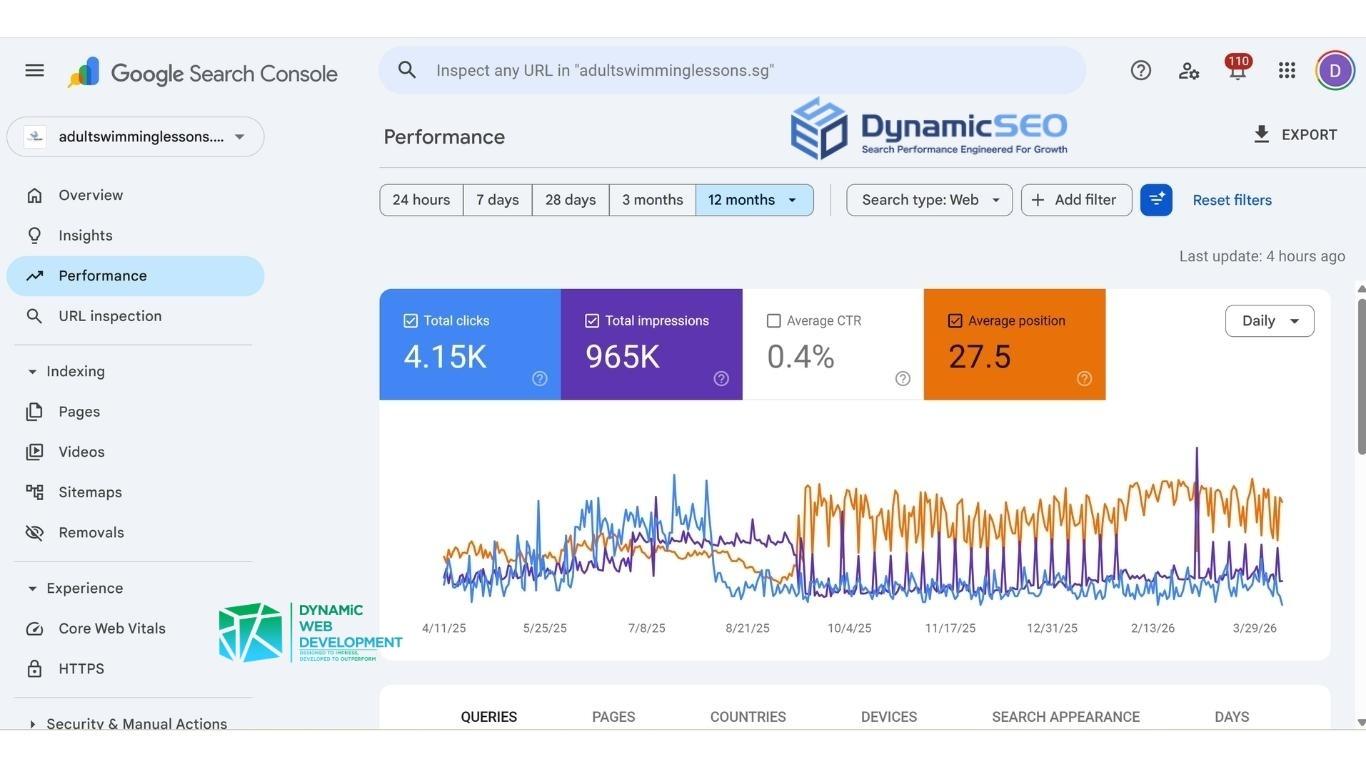
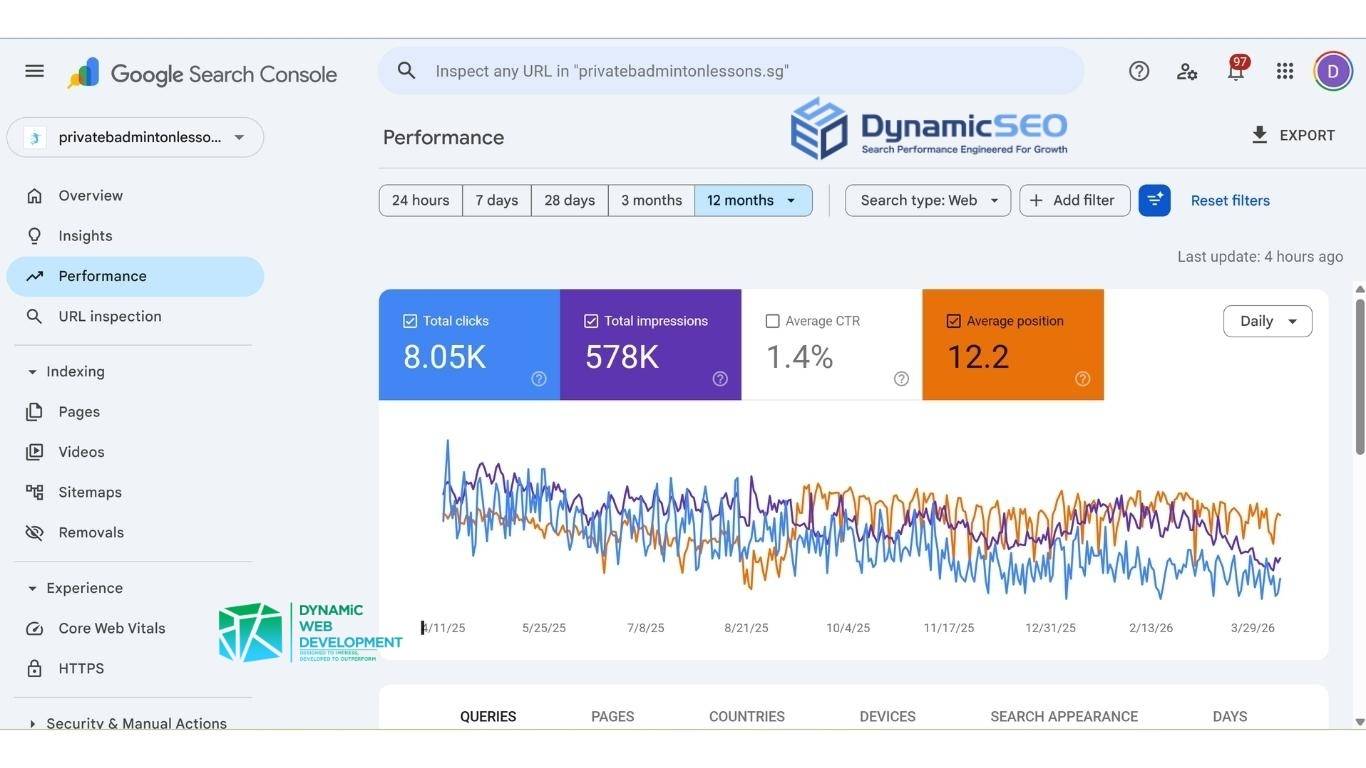
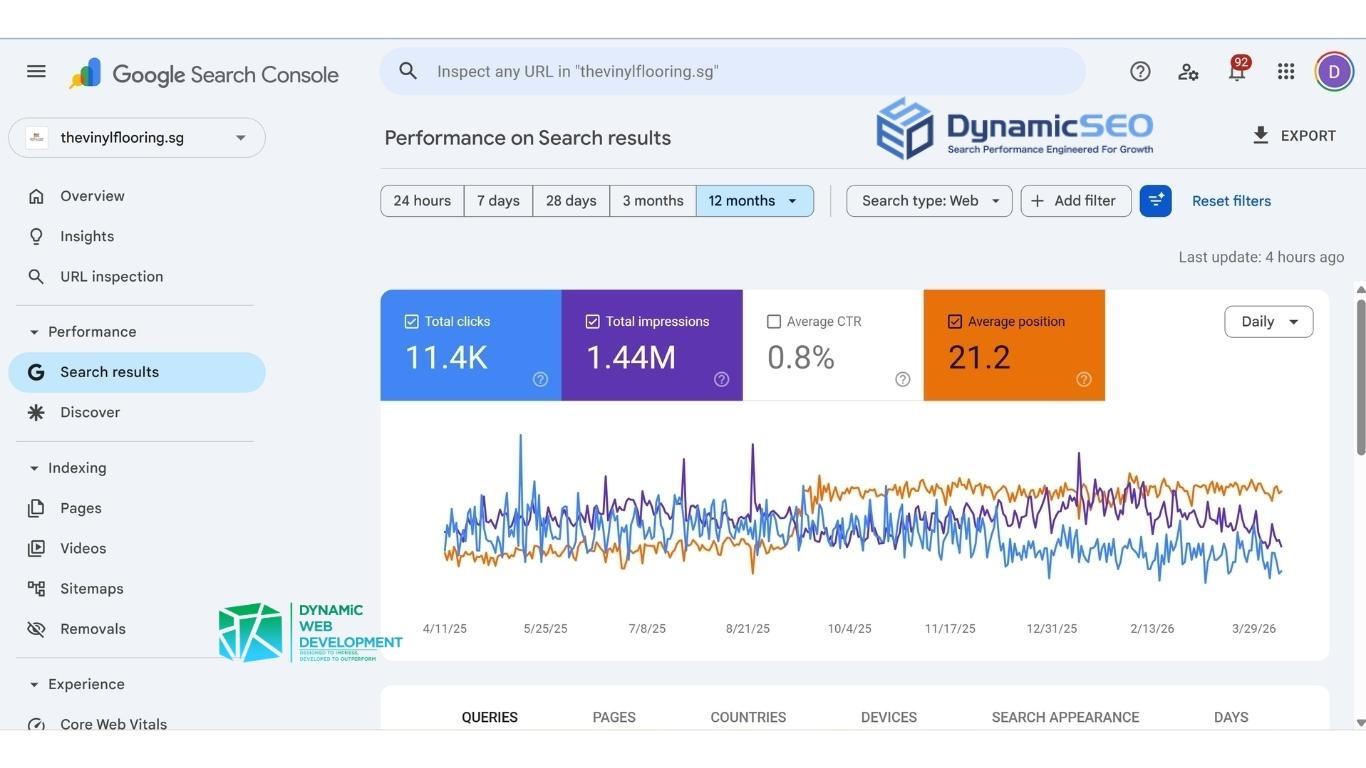
Using Google Search Console allows businesses to analyse:
- Impressions
- Clicks
- CTR
- Average position
A declining CTR may indicate stronger competition, weak metadata, or the increasing impact of AI-generated search summaries.
Analyse Conversion And Lead Generation Data
SEO success should ultimately connect to business outcomes.
Tracking conversions helps determine whether organic traffic is generating:
- Leads
- Sales
- Enquiries
- Form submissions
- Calls
A page attracting thousands of visitors but producing no conversions may require stronger intent alignment or clearer calls to action.
Businesses that connect SEO metrics with revenue data gain a far more accurate understanding of SEO performance.
Evaluate Technical SEO Health
Technical SEO issues can limit rankings even when content quality is strong.
Regular technical monitoring helps identify problems such as:
- Crawl errors
- Broken links
- Slow page speeds
- Indexation issues
- Mobile usability problems
Technical SEO directly affects how search engines interpret and rank your website.
Regular audits and monitoring ensure that your website remains accessible and optimised for both traditional search engines and AI search systems.
Track Backlinks And Authority Signals
Backlinks remain one of the strongest authority signals in SEO.
Tracking backlink growth helps businesses understand:
- Which content attracts authority
- Which pages gain references
- Whether domain trust is improving
Strong backlinks from relevant and trustworthy websites can significantly strengthen ranking potential.
However, quality matters far more than quantity. A smaller number of authoritative backlinks often outperforms large volumes of low-quality links.
Monitor User Engagement Metrics
Search engines increasingly evaluate how users interact with websites.
Engagement metrics provide insight into content quality and user satisfaction.
Important indicators include:
- Time on page
- Bounce rate
- Scroll depth
- Returning visitors
- User interactions
If users leave quickly or fail to engage, it may signal poor relevance or weak user experience.
Modern SEO increasingly overlaps with UX optimisation because engagement strongly influences long-term visibility.
Track AI Search Visibility And Mentions
SEO tracking is evolving alongside AI search.
Traditional keyword rankings no longer provide the full picture because users increasingly receive answers through AI-generated summaries and conversational search systems.
Businesses should now monitor:
- AI citations
- Brand mentions
- AI-generated recommendations
- Visibility within generative search experiences
This broader visibility approach aligns with modern strategies such as Generative Engine Optimisation (GEO) and Answer Engine Optimisation (AEO).
Use SEO Tools To Centralise Data
SEO tracking becomes far more effective when data is centralised.
Popular tools include:
- Google Search Console
- Google Analytics
- Ahrefs
- Semrush
These tools help businesses track rankings, backlinks, technical performance, keywords, and traffic trends more efficiently.
Combining multiple data sources creates a more accurate understanding of SEO performance.
Focus On Long-Term SEO Trends
SEO progress should never be judged over a few days or weeks.
Search visibility grows gradually through:
- Authority building
- Content expansion
- Technical optimisation
- Backlink growth
- User trust
Short-term fluctuations are normal. The real goal is long-term upward trends across visibility, traffic, and conversions.
Businesses that analyse long-term performance data make better strategic decisions and avoid reacting emotionally to temporary changes.
Conclusion
Learning how to track SEO progress properly is essential for sustainable search growth.
Effective SEO tracking goes beyond rankings alone. Businesses must evaluate traffic quality, conversions, technical health, user engagement, authority signals, and AI visibility together to understand true performance.
The websites that succeed long term are not the ones obsessing over daily rankings. They are the ones consistently analysing data, refining strategies, and improving overall search visibility across both traditional and AI-driven search environments.
FAQ
Q: What is the most important metric for tracking SEO progress?
Q: How often should SEO progress be tracked?
Q: Is keyword ranking enough to measure SEO success?
Q: Which tools are best for tracking SEO performance?
Q: Does AI search affect SEO tracking?
Elevate Your Brand’s Online Presence with Our Expert SEO for Sustainable Growth

Partners in success, stronger together